
Living through a remodel, without losing your mind.
Most families stay at home while the work happens. A little preparation makes the weeks of construction far easier to live with.
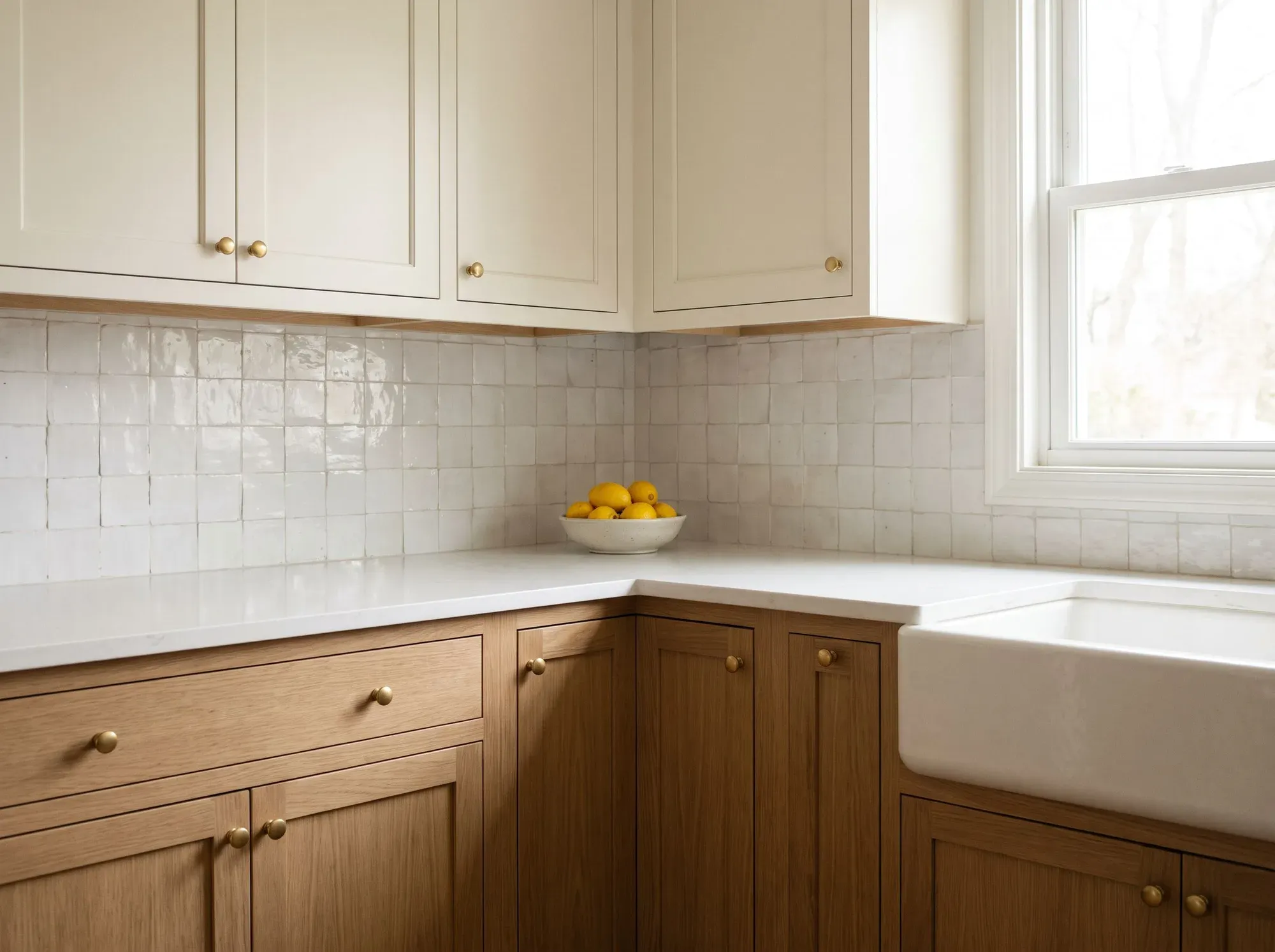
A remodel is disruptive however well it is run: strangers in the house, noise, dust and a room out of use. What you can control is how ready the household is for it.
Agree the basics before day one
Before work starts, ask for these in writing or settle them in a conversation with your designer. Knowing them in advance removes most of the daily friction.
- The working days and hours, and whether anyone will be there on Saturdays
- How the crew gets into the house, and who has a key or code
- Which bathroom the crew uses
- Where materials and tools are stored, and where the dumpster or trailer goes
- Who to call with a question, and how often you will get an update
- How dust will be kept out of the rest of the house
Set up a temporary kitchen
If the kitchen is being remodeled, build a small one somewhere else before demolition: the dining room, the basement or the garage all work.
- Move the old refrigerator rather than discarding it
- A microwave, a kettle, a toaster oven and a slow cooker cover most meals
- A folding table for prep, and a tub for washing up in the nearest sink
- Paper plates are not a moral failing for six weeks
- Keep one box of everyday dishes and pans; pack the rest
- A grill, in season, is a second kitchen
If the bathroom is out of use
With more than one bathroom, the household shifts to the other. With only one, tell us at the consultation: the schedule is planned to keep the time without a working toilet and shower as short as possible, and you will want a plan for the days it is unavoidable.
Dust, noise and the rest of the house
- Empty the rooms next to the work as well as the room itself; dust travels.
- Take pictures off shared walls. Demolition shakes them.
- Cover or move furniture in adjoining rooms.
- Change the furnace filter more often while work is under way.
- Demolition and tile cutting are the loud days. Ask when they are, and plan to be out if you work from home.
Children and pets
A job site is not safe for either. Agree which doors stay shut, keep pets in a closed room or out of the house during working hours, and walk children through the room only when the crew has left and the floor is clear.
Older homes
Homes built before 1978 can contain lead-based paint. Federal rules require contractors who disturb painted surfaces in those homes to follow lead-safe work practices. If your house is of that age, raise it at the consultation so it is planned for.
When it makes sense to move out
For a single kitchen or bathroom, almost everyone stays. Consider leaving for part of the project if the only bathroom is out of use for more than a few days, if a second-storey addition means the roof comes off, or if a whole-home remodel takes the kitchen and bathrooms at once.
Expect a quiet day or two
Not every day has someone on site. Countertops are measured after the cabinets are installed and then take time to fabricate; tile and waterproofing need time to cure; some steps wait for an inspection. These gaps are in the schedule. If one is not, ask.
Our free design consultation
- Most popular
Showroom appointment
- Meet your designer in person
- See cabinets, stone, tile and flooring side by side
- A 3D rendering to visualise your room
-
Home visit
- We come to you and measure the space
- Talk through how you use the room
- Ideas that fit the house you have
-
Request a call back
- Pick a time that suits you
- A designer from our team calls you
- Advice on where to start and what to expect
Ready to talk about your project?
Book a free design consultation at our Schaumburg showroom or at your home.
-
One dedicated designer
The same person from the first plan to the final walkthrough.
-
Schaumburg showroom
See cabinets, stone, tile and flooring in person before anything is ordered.
-
Backed by warranty
A lifetime warranty on most products, and one year on our labor.